GuideDream triggers, reward checks, and daily island routine
Tomodachi Life Dreams Guide: Rewards, Triggers & Daily Routine
Dreams are short island scenes that appear when a Mii is asleep and a dream bubble is available. Watch them when they appear, collect the reward, and treat dream checks as a light daily routine rather than a mechanic you can force on command.
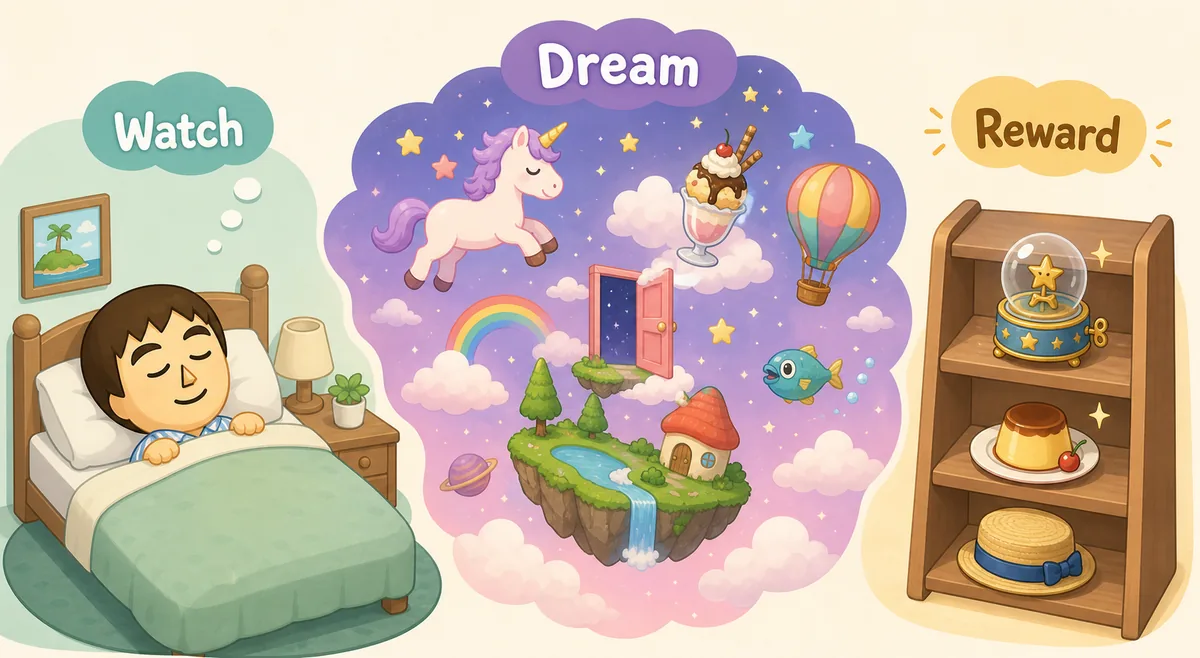
Editorial illustration for dream checks and rewards; not a real gameplay screenshot.
How do dreams trigger?
Check sleeping Miis. A visible dream bubble means the game has a dream scene ready; no reliable button forces a specific dream instantly.
What do dreams give?
Dreams usually give a small reward or collectible-style item after the scene. Track what you receive if you are building a completion list.
Do dreams end?
Individual dream scenes end after you watch them, but dream checking stays part of the island loop whenever sleeping Miis and new bubbles appear.
Quick Answer: Dreams Are Check-In Events, Not a Forced Farm
In Tomodachi Life: Living the Dream, dreams work best as a short daily surprise. When a resident is asleep and the game shows a dream bubble, open it, watch the scene, and collect the reward afterward. The important point for new players is that dreams are not a menu where you choose a specific scene on demand. They are closer to island events that appear when the resident state, time, and game rhythm line up.
That is why a good dreams guide should not promise an exact button sequence for one rare dream. The reliable advice is more practical: keep enough residents on the island, check apartments at different times, visit sleeping Miis before ending a session, and write down rewards you still need. This page keeps the explanation spoiler-light while still giving completion-minded players a routine they can repeat.
Player question
Short answer
Best action
How do I find dreams?
Look for sleeping Miis with a dream bubble.
Check apartments during calm or late sessions.
Can I force one exact dream?
Do not rely on a guaranteed force method.
Increase check chances instead of chasing one scene.
Are rewards missable forever?
Treat them as repeat-check rewards unless the game states otherwise.
Track what you receive after each dream.
Should I read a full spoiler list?
Only if completion matters more than surprise.
Use categories first, full lists later.
How Dream Triggers Usually Work
The visible trigger is simple: a Mii is sleeping and the game offers a dream bubble. Behind that, the exact selection can depend on ordinary simulation factors such as time, resident state, island activity, and random event timing. The practical lesson is to create more chances for dreams to appear rather than trying to manipulate a hidden list directly.
A varied island helps because more residents mean more apartments to check and more personalities to produce memorable scenes. If you only visit one favorite Mii, you will miss many opportunities. Make dream checks part of the same loop as problem bubbles, shops, food testing, relationship prompts, and room visits. If no bubble appears, move on; forcing the session usually wastes time.
A practical dream routine is about checking the right moments, not forcing one exact scene.
1
Check sleeping residents first
When an apartment shows a sleeping Mii or nighttime state, look for a dream indicator before leaving the building.
2
Rotate through the whole island
Do not only inspect one resident. A broad sweep gives the simulation more chances to surface a dream.
3
Keep normal island life active
Solve problems, feed residents, and maintain happiness so sessions keep producing varied events.
Dream Rewards: What to Expect After a Scene
After a dream scene, the game can hand you a small reward. Players usually care about this for two reasons: the reward can be funny in the moment, and repeated dream checks can help fill a broader item or collection goal. The reward is part of the payoff, but it is not the only reason to watch dreams. The scenes are also some of the strangest island flavor, which is why many players remember them even when the item is ordinary.
For a clean collection workflow, write down the resident, date, dream theme, and reward. You do not need a complicated spreadsheet at first. A simple table is enough to notice repeats and avoid confusing dream rewards with shop items, gifts, or problem-bubble rewards.
Dreams are useful because they combine a short scene with a small collectible reward.
Reward tracking field
Why it helps
Resident name
Shows whether you are only checking the same few Miis.
Dream theme
Helps identify repeats without spoiling every exact scene.
Reward received
Separates dream rewards from shop, gift, and problem rewards.
Session date
Makes it easier to compare short daily sessions over time.
Best Daily Dream Check Routine
A strong routine takes less than a minute once it becomes habit. Start with apartments because sleeping residents and dream bubbles can be easy to overlook. Then solve visible problems, visit shops, check relationships, and return to apartments before closing the session. The second pass matters because island events can change after you solve other prompts.
If you play in short sessions, do not turn dream hunting into a grind. Tomodachi Life is built around small unpredictable scenes. A clean routine gives you enough chances without making the game feel like a checklist app. Completion players can be stricter by keeping a reward list, but casual players can simply watch dreams when they appear.
1
Open apartments first
Look for sleeping Miis and dream bubbles before spending time in shops or menus.
2
Handle urgent bubbles
Solve visible problems and relationship prompts so the island keeps moving.
3
Return once before quitting
A final sweep catches easy dream opportunities you might otherwise miss.
4
Record only useful details
Track rewards and repeats, not every joke, unless you want a full spoiler archive.
Spoiler-Light Tracking Template
Many dream searches are really completion searches: players want to know whether they have seen everything. The safest spoiler-light method is to track by category first. Use broad labels such as food dream, travel dream, object dream, performance dream, strange transformation, or reward repeat. Only look up exact dream names when your reward list stops moving.
This approach is also better for multilingual players because fan names can vary between languages. A category note plus the reward item is more reliable than a translated dream title copied from an older 3DS guide or a forum post.
Tracking style
Best for
Downside
Category only
Players who want surprise and light completion notes.
Less precise when comparing with full lists.
Reward list
Players collecting items or checking repeats.
May not identify the scene by name.
Full dream title list
Completion guides and wiki editors.
Spoils the joke before you see it.
Limits, Old 3DS Advice, and Unsafe Shortcuts
Older Tomodachi Life advice is useful for understanding the series, but Living the Dream players should be careful with exact claims from 3DS-era pages. Dream names, rewards, timing, and feature availability can change between releases and regions. Use old lists as context, then verify against your current Switch game before treating them as final.
Avoid any page that turns dream rewards into a ROM, save editor, emulator pack, or unlocker pitch. A fan wiki can answer how dreams work without sending players to unsafe downloads. If a method requires game dumps, modified saves, account login, or executable tools, it is outside this site's editorial boundary.
Claim
How to treat it
Exact 3DS dream list
Useful background, but verify in Living the Dream.
Guaranteed rare dream trick
Be skeptical unless the current game proves it.
Save editor reward unlock
Avoid; use normal dream checks instead.
Forum screenshot of a reward
Helpful clue, not a complete official source.
Dreams FAQ
How do I get dreams in Tomodachi Life: Living the Dream?
Check sleeping Miis and open a dream bubble when one appears. The most reliable routine is to sweep apartments during each session instead of trying to force one specific dream.
Do dreams end in Tomodachi Life?
A single dream scene ends after you watch it, but dream opportunities can continue appearing as part of the island loop when residents sleep and the game surfaces a bubble.
Do all dreams give rewards?
Dreams commonly lead to a small reward or collectible-style item after the scene. Track the reward separately from shop purchases, gifts, and problem-bubble rewards.
Can I force a specific dream?
Do not plan around a guaranteed force method unless the current game clearly demonstrates one. Build more chances by checking more residents across normal play sessions.
Should I use old 3DS dream lists?
Use them as background only. Living the Dream can differ by release, region, localization, or update, so verify names and rewards in the current game.
Is it safe to download a save file for dream rewards?
No. Avoid ROMs, emulator saves, unlockers, account tools, and unknown downloads. Use official play and normal in-game checks.