Can I play it on Switch 1 or Switch 2?
The game is a Nintendo Switch title and is supported on Nintendo Switch 2. You do not need a separate Switch 2 edition just to start playing.
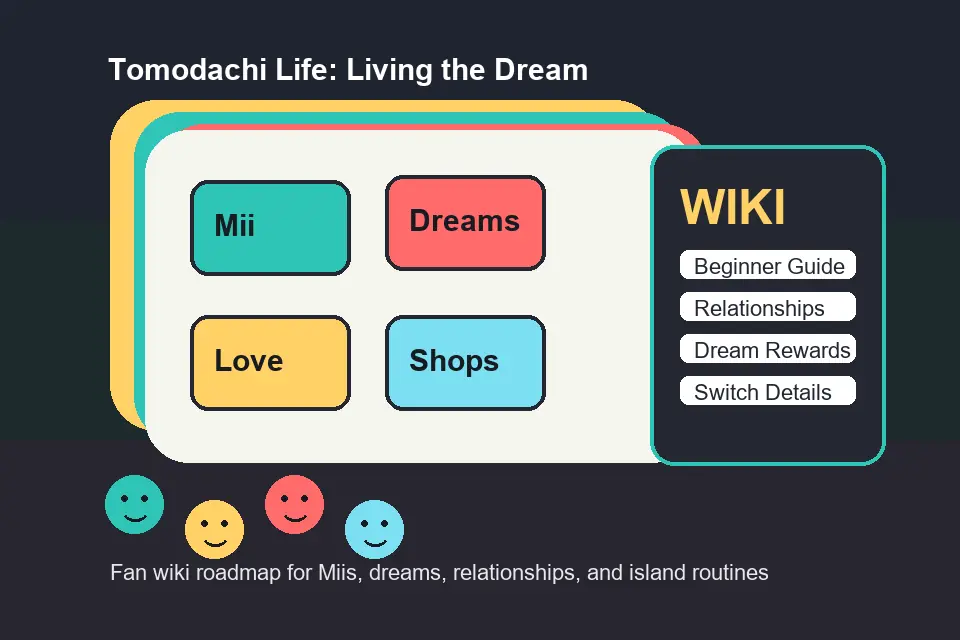
A focused fan guide hub for Mii creation, island routines, dreams, relationships, Switch compatibility, official availability, and practical first-week decisions.
Most searches around Tomodachi Life: Living the Dream are informational: players want to know what changed from the 3DS game, whether Switch 2 is required, how relationships work, how dreams and rewards trigger, and whether the game is worth buying.
The game is a Nintendo Switch title and is supported on Nintendo Switch 2. You do not need a separate Switch 2 edition just to start playing.
Review intent is mixed but active: players praise the creative Mii and island tools, while some long-time fans ask whether the daily loop has enough variety.
Post-launch guide queries are growing around Mii relationships, marriage, friendship, dream sequences, reward items, island building, and unlock routines.
Use these sections as a quick route into the mechanics players ask about most.
Build residents from friends, family, original characters, or favorite fictional casts. Track personality choices, voices, pronouns, and how each Mii behaves on the island.
Characters & Mii LimitPlan the 70-Mii island roster, import boundaries, children, and when to save open slots for future residents.
Personality ChartUse all 16 personality types, regional names, and slider notes to build Miis that make island scenes more varied.
Relationships GuideUnderstand friendships, romance, breakups, living together, marriage, kids, same-sex relationship questions, and what parts of the relationship system you can influence without fully controlling.
Dreams & RewardsLearn when dream bubbles appear, what rewards can drop, and why checking sleeping Miis is one of the most useful passive routines.
What You Do Every DayUse a practical loop for resident requests, shops, social scenes, dreams, island visits, and creative projects.
Shops, Items & Island RoutinePlan daily check-ins around food, clothes, gifts, interiors, wishes, island decorating, and happiness gains.
Food, Favorite & Catalog GuideBuy food, test Mii reactions, and build a version-safe food list without mixing Living the Dream with old 3DS advice.
Switch & Switch 2 DetailsConfirm platform support, official store links, price intent, and safe purchase guidance without ROM, emulator, or unofficial download links.
3DS vs Living the DreamCompare the new customization, inclusivity, island interactivity, sharing restrictions, and repeated-session loop against the earlier Tomodachi Life.
Switch & Switch 2 CompatibilityDecide whether to play on Switch 1, Switch Lite, OLED, or Switch 2, and confirm safe official purchase paths.
Gifts, Rewards & Catalog GuideUnderstand resident gifts, level-up items, birthday observations, and how to keep a version-safe list without treating old 3DS notes as universal rules.
Music GuideSeparate songs, soundtrack terms, official listening sources, Music Hall questions, and 3DS versus Living the Dream evidence.
Tomodachi Life: Living the Dream works best as a short-session island diary. The early goal is not to optimize one perfect route; it is to create enough varied residents that the game can generate funny social moments.
Start with yourself, a few real friends, several fictional characters, and at least one deliberately chaotic personality. A varied cast gives the relationship system more interesting pairings.
When a Mii has a visible prompt, solve it before shopping or decorating. Problems often lead to happiness, money, social events, and relationship changes.
Preferences are learned by trial and error. Keep notes on favorite foods, disliked gifts, and outfits that consistently raise happiness.
Dream bubbles are easy to miss. Tap them when they appear because dreams can reward items and create memorable island scenes.
You can encourage or discourage relationships, but the game decides plenty on its own. That unpredictability is part of the core loop.
The Mii creator is the foundation of the game. Strong islands usually mix recognizable people with original characters so every news report, argument, dream, and romance feels like a private joke. Use names, voices, personality sliders, catchphrases, and styling choices to make each resident easy to recognize at a glance.
Relationships are partly player-guided and partly simulated. You can respond when Miis ask for advice, introduce people, encourage romance, or cool down conflict, but attraction and friendship momentum still have random elements. Watch relationship status changes over time instead of expecting exact control.
Dreams appear when a sleeping Mii has a dream indicator. They are worth checking because they add item rewards and some of the strangest scenes in the game. If you are building a complete collection, make dream checks part of your daily routine alongside shops and problem bubbles.
A good check-in starts with resident problems, then shops, then dreams, then island decorating. Raise happiness with food, clothes, interiors, gifts, and social support. Wishes become a long-term reward path, so small daily sessions can still move the island forward.
| Topic | Living the Dream | 3DS Tomodachi Life |
|---|---|---|
| Creativity | Expanded Mii creation, island design, objects, and customization make the Switch game more expressive. | The 3DS game is simpler, faster, and remembered for its spontaneous charm. |
| Relationships | More inclusive options, broader relationship outcomes, and more modern identity choices. | More limited relationship framework, but familiar to long-time players. |
| Session Feel | Better for creative setup and short daily island checks, though some players report repetition after long sessions. | Nostalgic, compact, and often praised for quick comedic surprises. |
Tomodachi Life: Living the Dream is a paid Nintendo Switch game. Official Nintendo Support lists the latest software update as Ver. 1.0.4, released July 23, 2026. Use the Nintendo store page for purchase information and update the game through your Switch console over the internet. This wiki does not provide ROMs, NSP files, emulator builds, cracked files, or unofficial APK downloads.
It is Nintendo's 2026 social simulation game for Nintendo Switch where players create Mii residents, place them on an island, and watch friendships, dreams, romances, arguments, gifts, shops, and strange daily events unfold.
It is a Nintendo Switch title with Nintendo Switch 2 compatibility. The official store lists Switch 2 support with behavior consistent with Nintendo Switch.
The game released on April 16, 2026. Older pages may still frame it as upcoming, so use current official pages or recent reviews for the latest status.
Nintendo Support lists Ver. 1.0.4 as the latest update, released July 23, 2026. Update from the Switch HOME Menu via Software Update > Via the Internet.
You can influence relationships by giving advice, introducing Miis, and responding to prompts, but the simulation includes randomness. It is better to guide outcomes than expect exact control.
Dreams can trigger when Miis are asleep and a dream indicator appears. Interacting with the dream starts a sequence and can reward an item afterward.
No. tomodachi-life.blog is an independent fan-made wiki and guide site. It is not affiliated with Nintendo.
No. Search demand exists for ROM and emulator terms, but this site only recommends official purchase and play sources.
Create a varied cast of Miis, solve problem bubbles, check shops, track food and clothing preferences, and tap dream bubbles whenever sleeping Miis show them.