Music guideSongs, soundtrack terms, listening sources, and version boundaries
Tomodachi Life Music Guide: Songs, Soundtrack & Music Hall Questions
Tomodachi Life music searches can mean island background tracks, vocal performances, the official soundtrack, a scene melody, or the older 3DS Music Hall. This guide separates those intents, starts with official sources, and marks Living the Dream version limits clearly.
Editorial illustration for this guide; it is not a real Tomodachi Life gameplay screenshot.
Start with the current game
Start with the version you play; note place, time, scene, and language before naming a track.
Keep OST and songs separate
Soundtrack, song, theme, and Music Hall can lead to different sources when 3DS and Living the Dream results mix.
Use official sources first
Check Nintendo and Nintendo Music before trusting an unlabeled upload, filename, or downloadable pack.
What does Tomodachi Life music include?
The phrase Tomodachi Life music can mean island BGM, a vocal performance, the official soundtrack, a location melody, or the 3DS Music Hall. For Living the Dream, start with the release you own and record where the sound played, what residents did, time of day, and whether it returned after a menu or event. That context is stronger than a short melody description and keeps old 3DS references separate from current Switch evidence.
Search phrase
Usually means
Best first check
Tomodachi Life music
General game music or listening help
Current game audio plus official Nintendo pages
Tomodachi Life soundtrack / OST
Released or cataloged music
Nintendo Music and official release information
Tomodachi Life songs
Vocal songs, performances, or player-made song references
The current in-game scene and a version-labeled source
Music Hall in Tomodachi Life
Usually an older 3DS feature question
Check the platform before following old steps
How to hear and identify music in Living the Dream
To identify a tune, capture context before a title: apartment, facility, event, route, day or night, and what changed before the loop. Listen three times—melody, scene, repeat point—then record date, version, language, location, and whether it was continuous or event-based. Recheck on another visit so a menu cue or one-off event is not mistaken for background music.
1
Record the location
Write the island area, building, apartment, beach, or event context where the music was heard.
2
Record the timing
Note day or evening, the action that came before it, and whether the loop continued after the scene.
3
Describe the sound briefly
Use a few neutral clues such as vocal, instrumental, fast, calm, comic, or repeated hook instead of inventing a title.
4
Verify before labeling
Listen again or compare an official source before marking the tune as a confirmed Living the Dream track.
Separate what you hear in the game, what Nintendo publishes, and what you record yourself.
Songs, soundtrack, OST, and theme: which term should you use?
Soundtrack and OST overlap, but OST means original soundtrack, while soundtrack may mean a release, in-game music, or fan playlist. Song usually suggests a vocal or performance; theme can mean a recurring melody, menu cue, or overall identity. Keep a separate source field in your list, because OST, song, and Music Hall searches can describe different needs.
Term
Use it when
Do not assume
Soundtrack
You mean the game's broader music collection or release context
Every fan playlist is an official release
OST
You are referring to original soundtrack metadata or an official listening catalog
A search snippet proves a complete track list
Song
You mean a vocal, performance, or clearly song-like in-game piece
Every background loop has a public song title
Theme
You remember a recurring melody, menu cue, or overall musical identity
The word identifies a specific file or scene
Music Hall
You are checking an older platform feature or a current-version question
A 3DS walkthrough is current Switch documentation
How to build a reliable Tomodachi Life music list
Build one row per observation: neutral track description, location, source type, check date, game version, and confidence. Keep 3DS material in a legacy column. A video can show a melody in one recording without proving its official title, universal trigger, or presence in every region. Preserve disagreements until platform, language, event state, or memory explains them.
1
Give the entry a neutral name
Start with a description such as “evening plaza loop” until an official or well-supported title is available.
2
Add source and version
Mark in-game observation, Nintendo source, community report, or legacy 3DS reference, then add the date and version.
3
Use confidence labels
Use confirmed, repeated observation, lead, or unresolved rather than presenting every row as equally certain.
4
Review duplicates
Compare melody, location, timing, and scene before creating a second entry for what may be the same loop.
Music Hall questions: separate the 3DS archive from the current game
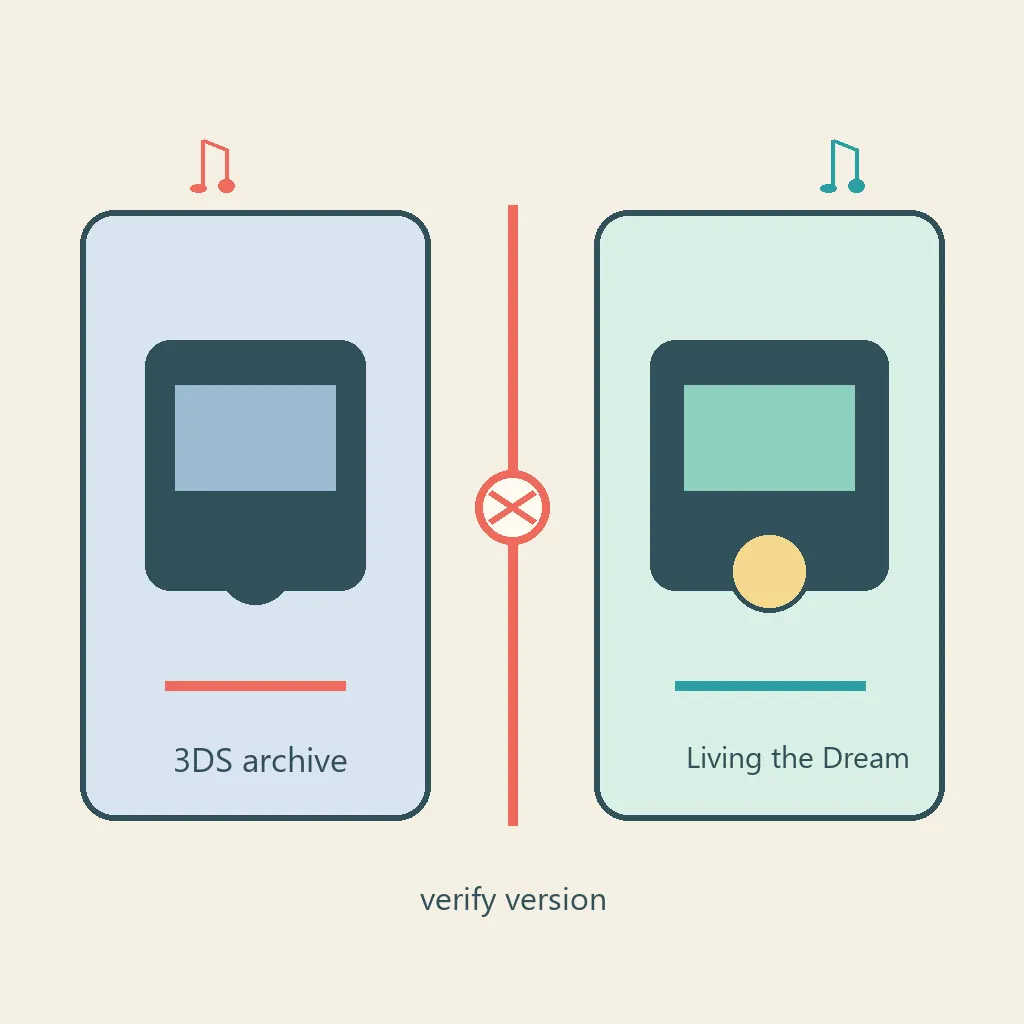
Music Hall searches need a platform warning. Older pages may describe a 3DS building or performance flow, not a current Switch menu. Follow facilities and prompts that appear in Living the Dream; label 3DS notes as archive and current observations separately. Treat a similar melody as a possible series link until the current arrangement is confirmed.
Evidence
How to treat it
Why
Current Switch gameplay observation
Primary evidence for a Living the Dream note
It matches the platform and version you are using
Nintendo game or developer page
Official context for the release and soundtrack
It is stronger than an uncited repost
Older 3DS guide
Historical or possible lead
Menus and features may not transfer directly
Community video or spreadsheet
Useful secondary reference with a source/date label
It can show an observation without proving a universal rule
A platform boundary keeps old Music Hall notes from being mistaken for current Switch instructions.
Official soundtrack sources, Nintendo Music, and fan uploads
Use Nintendo's game, developer, support, and Nintendo Music pages for release context and availability. Fan recordings can suggest a melody, but label platform, version, region, uploader, and date. Keep listening separate from verification: an official page, an in-game observation, and a community post may each prove different parts.
1
Check first-party pages
Use Nintendo's game, developer, support, and Nintendo Music pages for release-level information.
2
Compare the platform
Confirm that the page or recording refers to Living the Dream rather than the older 3DS game.
3
Label community evidence
Keep the uploader, page date, recording context, and uncertainty in your notes.
4
Avoid unsafe downloads
Do not use ROM packs, ripped soundtrack archives, unknown executables, or files that ask for account credentials.
Version, copyright, and update notes
Music information can change after patches, regional naming changes, or new service availability. Date every catalog entry and link to official listening or purchase sources. Do not redistribute ripped audio, ROMs, or unknown packs; update this page when Nintendo changes official availability instead of copying third-party filenames.
If your note says
Add this context
Safer wording
Latest song list
Checked date, platform, region, and source
Current list checked on a stated date
Music Hall guide
3DS or Living the Dream platform
Historical Music Hall reference or current-version question
Free OST download
Official listening or purchase source
Official listening options; no redistributed audio
Confirmed track name
Official metadata or repeated in-game evidence
Confirmed by the cited source or repeated observation
Tomodachi Life music FAQ
What music is in Tomodachi Life: Living the Dream?
Separate current in-game music from soundtrack listings. Record the scene and version, then compare with Nintendo or Nintendo Music instead of assuming an old 3DS list is complete.
Where can I listen to the Tomodachi Life soundtrack?
Check Nintendo Music and Nintendo's official pages first. Availability can vary by service, region, and date, so use the official source for the current answer.
Does Tomodachi Life: Living the Dream have a Music Hall?
Treat old 3DS Music Hall guides as historical until current Switch facilities and official information confirm the feature.
What is the difference between Tomodachi Life songs and the OST?
Song usually suggests a vocal or performance piece; OST means original soundtrack information or a catalog. Record the source and scene before choosing a label.
Can I download Tomodachi Life music or an OST pack?
This site does not distribute ripped audio, ROMs, or unknown packs. Use an official listening or purchase source and avoid files requesting credentials.
How do I identify a song I heard on the island?
Record location, time, resident action, melody clues, language, and version. Recheck the scene, then compare it with a clearly labeled source.
Are old Tomodachi Life music lists still accurate?
They can help as 3DS history, but current Living the Dream menus and scenes need separate verification. Mark unconfirmed track names as leads.